Category: Uncategorized

  • Anglo American Charts a Profitable New Course with Streamlined Strategy

    Anglo American Charts a Profitable New Course with Streamlined Strategy

    In a bold move signaling a shift toward a leaner and more efficient future, Anglo American has revealed impressive financial expectations despite 2025 being a transitional year. The company, which trades on the Johannesburg Stock Exchange, is forecasting a robust 43% margin in earnings before interest, taxes, depreciation, and amortisation (Ebitda) for its restructured operations. This pivot reflects a strategic focus on higher-value assets and a commitment to operational excellence, according to CEO Duncan Wanblad.

    The simplified business model is designed to hone in on core strengths while shedding non-strategic and lower-margin elements. By concentrating on its most profitable mining ventures, Anglo American aims to enhance its resilience amid market fluctuations. This streamlining effort is as much about adaptability as it is about profitability, particularly in an industry where commodity prices and global demand cycles can shift at a moment’s notice.

    Part of this transformation includes leveraging technology and innovation across mining operations to drive efficiency and reduce environmental impact. Digital integration, automation, and real-time data systems are enabling the company to make more informed decisions, decrease costs, and boost productivity. These changes aren’t just cosmetic adjustments—they’re part of a long-term blueprint toward becoming a future-focused enterprise.

    CEO Wanblad emphasized in a recent media address that this strategic overhaul is not only enhancing financial results but also positioning Anglo American as a top-tier player in sustainable mining. With global scrutiny on mining’s ecological footprint, this renewed direction serves both shareholders and environmental stakeholders. Wanblad’s remarks highlight the company’s goal of becoming more cash generative and delivering greater returns while simultaneously contributing positively to broader sustainability goals.

    As Anglo American embarks on this new chapter, it’s clear the focus is not just on short-term gains but on building long-lasting value. With a sharpened portfolio, commitment to innovation, and dedication to sustainability, the company is setting itself up to thrive in a rapidly evolving global mining landscape. This 43% margin is more than a number—it’s a signal of a company taking confident steps into the future.


  • Private Advisor Group Eases Position in YPF: Strategic Move or Routine Rebalance?

    Private Advisor Group Eases Position in YPF: Strategic Move or Routine Rebalance?

    In a subtle shift that has caught the attention of market watchers, Private Advisor Group LLC trimmed its holdings in Argentine energy giant YPF Sociedad Anonima by a modest margin during the first quarter. According to its latest disclosure with the Securities and Exchange Commission, the firm reduced its stake by 455 shares, translating to a 2.9% decrease. This now leaves them with 15,003 shares in the oil and gas exploration company.

    Though the transaction may seem minor at first glance, it may reflect broader strategic maneuvering or simply a routine portfolio rebalance. YPF, a significant player in Argentina’s energy sector, has been under the microscope due to fluctuating oil prices and geopolitical influences. Changes in institutional holdings like this can sometimes offer insights into fund managers’ perspectives on a stock’s near-term potential.

    YPF’s stock performance has experienced typical volatility, mirroring global energy trends and domestic economic conditions in Argentina. The company has been actively involved in upstream and downstream investments, bolstering its presence across the value chain. Meanwhile, investor interest continues to be shaped by both macroeconomic stability in the region and commodity price forecasts.

    Private Advisor Group isn’t alone in reevaluating positions within energy stocks, especially as the industry recalibrates following shifts in global demand and energy policy changes. While the 455-share sale is unlikely to rock the boat, it’s a clear indication that even small adjustments by investment firms can reflect nuanced assessments of future market conditions.

    In conclusion, while Private Advisor Group’s reduction in YPF shares might appear negligible, it provides a glimpse into how asset managers are navigating an increasingly complex energy investment landscape. For long-term investors tracking YPF, this move may serve as a reminder to continue watching institutional activity and broader market cues when assessing stock performance.

  • Ligand Pharmaceuticals Gains Momentum as Investor Confidence Grows

    Ligand Pharmaceuticals Gains Momentum as Investor Confidence Grows

    Ligand Pharmaceuticals is catching the eye of investors this week as its stock shows clear signs of upward momentum. With a marked improvement in its market performance, Ligand recently saw its Relative Strength (RS) Rating climb to 84, a notable increase from the previous score of 79. This metric, often used by investors to assess a stock’s price strength against others in the market, points to Ligand’s growing resilience and investor interest.

    Analysts often watch the RS Rating closely, as it measures how a stock has performed over a 12-month period compared to others. With an RS score of 84, Ligand now places itself within the top tier of market performers, suggesting a positive trend in both its price movement and investor sentiment. This upward shift could be reflective of confidence in the company’s long-term vision and execution strategy.

    Ligand Pharmaceuticals has been known for its innovative business model, licensing novel drug development capabilities to larger pharmaceutical firms. This approach allows for a diversified revenue stream and reduces the capital risk typically associated with drug development startups. Investors may now be signaling their approval of Ligand’s strategic direction as the market continues to reward its consistent approach to value creation.

    Looking beyond the numbers, Ligand appears to be building a strong technical base from which further growth could emerge. If this trend continues, it may attract additional institutional interest, a key driver of sustained momentum in the stock market. For traders and long-term investors alike, tracking how the company capitalizes on its current trajectory will be essential.

    In conclusion, Ligand Pharmaceuticals is showing signs of renewed strength in a challenging market. The recent rise in its RS Rating underscores a bullish outlook from investors who appreciate both its business model and its current positioning. As it continues to push ahead, Ligand will be a company to watch for those seeking robust performance in the pharmaceutical sector.

  • Motorola Solutions Faces Adjusted Q2 Projections: What Investors Need to Know

    Motorola Solutions Faces Adjusted Q2 Projections: What Investors Need to Know

    In a recent shift that has caught investor attention, Motorola Solutions is projected to report slightly lower earnings for the second quarter of fiscal 2027. A research update issued by Zacks has led to a revision in the anticipated earnings per share (EPS), signaling a more cautious outlook for the communications technology firm. The revised estimate reflects changing market dynamics and possibly tempered expectations for near-term growth.

    Zacks Research, known for its detailed financial analysis, revised Motorola’s Q2 2027 EPS forecast from previous expectations to $3.07. While the adjusted number still shows profitability, it marks a subtle but noteworthy downgrade. Such shifts often take into account evolving demand trends, cost structures, and potential regulatory or supply chain challenges.

    Motorola Solutions has long been a staple player in public safety communications and business-critical services, with a robust presence in both hardware and software segments. However, fluctuations in the global economy, procurement cycles from government agencies, or disruptions in tech supply chains can significantly affect short-term earnings potential. Analysts often recalibrate forecasts to reflect these complex variables.

    For shareholders and prospective investors, this revised figure may influence short-term sentiment, but it’s important to evaluate it within the broader context of Motorola’s long-term strategies and consistent performance history. The company has demonstrated resilience and adaptability across decades, managing to stay relevant in a rapidly evolving tech landscape.

    As with any forecast, this adjusted EPS projection is just one piece of a much larger puzzle. While it may cause a temporary ripple in market confidence, it also serves as a reminder of the ever-changing nature of today’s business environment. Investors would be wise to align such updates with broader trends and solid fundamental analysis before making decisions.

  • Shell Powers Through: Big Profits, Bigger Shareholder Loyalty

    Shell Powers Through: Big Profits, Bigger Shareholder Loyalty

    In the latest quarter, Shell has once again proven its resilience and strategic focus by delivering profits that defied analyst expectations. At a time when commodity markets remain volatile and global economic conditions are fraught with uncertainty, the energy behemoth has shown that it can weather financial storms with impressive steadiness. The firm’s second-quarter performance highlights its adeptness at navigating shifts in the industry while maintaining profitability.

    Central to Shell’s latest financial update is the announcement that it will continue its $3.5 billion share buyback program without missing a beat. This move reflects a broader commitment to enhancing shareholder value, a strategy that has taken center stage for the company in recent quarters. Investors appear to be reaping the benefits of Shell’s emphasis on disciplined capital allocation, amid ongoing optimization efforts and cost-cutting measures.

    Shell’s ability to maintain profit strength even amid energy price fluctuations can be attributed to its diversified business model and ongoing efficiencies. As part of its long-term blueprint, Shell has been streamlining operations and tightening expenses in a bid to fortify its margins. These efforts have not only shielded the company from potential market shocks but also enhanced its agility in responding to emerging economic trends.

    The company’s strategic clarity is worth noting: Shell has prioritized rewarding its investors while laying the groundwork for future resilience and growth. This dual focus appears to be paying off, as demonstrated by its stable buyback strategy and stronger-than-expected financial results. As energy companies worldwide wrestle with the transition to cleaner sources, Shell seems prepared to maintain its edge through sound financial stewardship and adaptive planning.

    In essence, Shell’s latest earnings are more than just numbers—they’re a statement of intent. With a clear roadmap that balances shareholder interests, operational efficiency, and forward-looking strategies, the oil major is positioning itself not just to survive but to thrive. If current trends are any indication, Shell may very well continue to be a formidable player in the evolving energy sector for years to come.

  • Euronext Sets Sights on Greece in Ambitious Expansion Move

    Euronext Sets Sights on Greece in Ambitious Expansion Move

    Euronext, Europe’s major cross-border exchange operator, has officially rolled out plans to acquire all outstanding shares of the Athens Stock Exchange (ATHEX) through a voluntary share swap offer. If completed, this agreement would mark a major milestone in the company’s ongoing mission to unify and modernize Europe’s capital markets. The proposed deal offers ATHEX shareholders 20,000 shares of their existing stock in exchange for a single newly issued Euronext share, illustrating Euronext’s confidence in the long-term value of the Greek financial marketplace.

    This strategic offer aligns with Euronext’s vision to bind the continent’s fragmented capital markets into a centralized, innovation-led framework. With member exchanges already spanning major European centers, including Paris, Milan, Lisbon, and Dublin, the inclusion of the Athens exchange would serve both symbolic and operational purposes. It not only elevates Greece’s market profile but also equips it with the leading-edge trading and clearing technologies underpinning Euronext’s massive liquidity environment.

    For Greek investors and the broader Hellenic market, the merger promises increased exposure to global capital flows. By joining a €6 trillion network of listed counterparts, companies navigating the Athenian exchange will benefit from heightened visibility, better access to financing, and improved investor confidence. Euronext is also targeting tangible economic gains, projecting €12 million in annual efficiency savings by 2028, partially offset by implementation expenses totaling €25 million.

    Perhaps most significantly, this move comes at a time when Greece’s economic revitalization is in full swing, fueled by rising foreign investment and macroeconomic resilience. The acquisition reflects Euronext’s vote of confidence in the country’s outlook and its strategy to establish a financial nucleus for Southeastern Europe. ATHEX’s board is unanimously behind the deal, having entered into a cooperation agreement that signifies trust in Euronext’s vision and execution capabilities.

    As Europe grapples with challenges ranging from capital mobility to technological modernization, moves like Euronext’s expansion into Greece spotlight the evolution of capital markets towards a more interconnected, efficient future. If approved, this deal not only reshapes the regional exchange landscape but potentially sets a template for cross-border collaboration across other financial infrastructures in Europe.

  • Wedbush Predicts Strong Q2 Earnings for AppLovin: Here’s What It Means

    Wedbush Predicts Strong Q2 Earnings for AppLovin: Here’s What It Means

    AppLovin Corporation, a key player in the mobile app technology space, is once again in the spotlight as Wall Street prepares for its upcoming quarterly performance. Recently, Wedbush issued its earnings expectations for the company’s second quarter of fiscal year 2025. At the center of attention is the $2.09 per share earnings estimate put forward by analyst A. Reese, signaling robust performance ahead.

    AppLovin has consistently positioned itself as a leading force in mobile monetization and performance marketing, leveraging its advanced machine learning and ad delivery platforms. With the growing demand for mobile-driven engagement and data optimization, investors are keeping a close eye on the company’s financial trajectory. Analyst projections like these can significantly influence market sentiment and trading activity in the lead-up to earnings announcements.

    The $2.09 per share projection not only suggests strong operational execution but also implies broader confidence in AppLovin’s business model amid evolving digital advertising trends. Since transforming into a software-centric enterprise, AppLovin has managed to enhance both reach and revenue generation, key pillars for long-term success. This earnings expectation underscores investor optimism in those strategic shifts paying off.

    While the official Q2 results have yet to be published, this estimate reflects how bullish Wedbush remains on AppLovin’s ability to outperform. Factors such as increased ad spending, global app engagement, and advancements in AI-powered optimization likely factor into this optimistic outlook. For shareholders, this is a promising signal that the company could continue its trend of exceeding market expectations.

    In conclusion, Wedbush’s positive stance on AppLovin’s Q2 earnings paints a favorable picture for the company’s near-term future. With technological innovation in its corner and macro trends aligning, AppLovin appears poised for sustained momentum. As the official earnings date draws near, all eyes will be on whether the company can live up to—and perhaps surpass—these bold forecasts.

  • Fagron’s Momentum Builds: A Promising First Half Ignites Global Growth Ambitions

    Fagron’s Momentum Builds: A Promising First Half Ignites Global Growth Ambitions

    Fagron, a global leader in pharmaceutical compounding, has made an impressive start to 2025, reporting notable growth in both revenue and profitability. The first half of the year closed with an 11% increase in revenue compared to the same period last year, solidifying the company’s expanding footprint in the healthcare sector. This robust performance is a reflection of sustained demand in personalized medicine and a growing emphasis on tailored pharmaceutical solutions.

    One of the key highlights of Fagron’s semi-annual report is the 12% rise in REBITDA, signaling enhanced profit margins and improved operational efficiency across its business lines. This margin expansion underscores the company’s strategic execution in integrating past acquisitions and optimizing its workflows. It’s evident that Fagron is not just growing in size but becoming smarter in how it delivers value.

    Operational cash flow surged over 25%, reaching €52.5 million, which provides the company with a strong foundation to fund future investments and strategic endeavors. This financial strength enables Fagron to reinvest in core capabilities and pursue new market opportunities, ensuring its long-term resilience and agility in a competitive sector.

    Looking ahead, Fagron is set to amplify its impact with a significant $29 million investment to expand its Anazao Las Vegas facility. Scheduled to begin in the final quarter of 2025, this expansion will enhance its 503B capabilities, reinforcing its commitment to sterile compounding excellence. Additionally, the company is entering new geographies, marking its debut in Australia and Serbia—two promising markets ripe for personalized medication solutions.

    Fagron’s strong performance in the first half of 2025 reflects more than short-term momentum; it is a result of sound strategy, disciplined operations, and a forward-looking global vision. By continuing to innovate and expand, Fagron positions itself not just as a market player, but as a catalyst for the future of personalized pharmaceutical care.

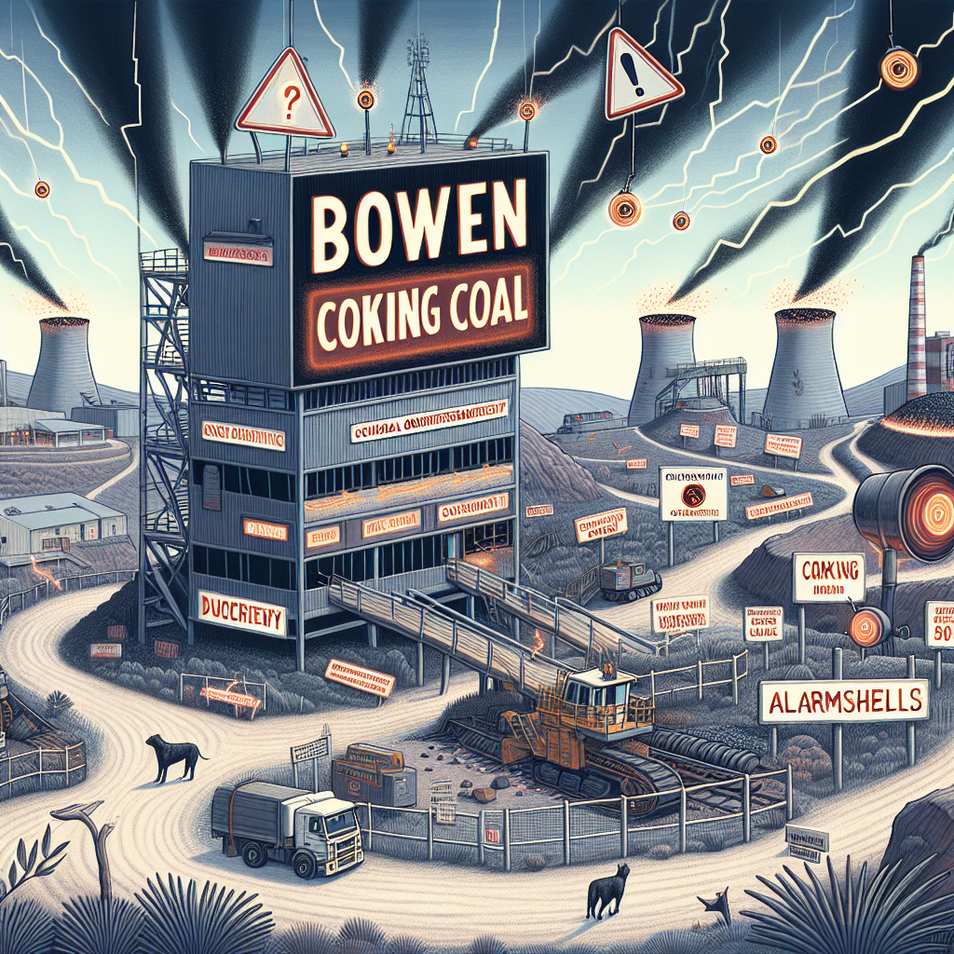
  • Bowen Coking Coal’s Collapse: A Warning Sign for Australia’s Mining Future

    Bowen Coking Coal’s Collapse: A Warning Sign for Australia’s Mining Future

    In a major shake-up for Australia’s coal sector, Bowen Coking Coal has entered voluntary administration, sending shockwaves through the industry and raising alarm bells about the impact of recent royalty hikes. The company’s decision specifically affects its Burton coal mine operation in Queensland, placing the livelihoods of approximately 500 workers at risk and triggering broader concerns about the sustainability of mining under rising fiscal pressure.

    The Burton mine, once hailed as a promising asset in Bowen’s portfolio, has struggled to remain viable in a business environment squeezed by policy changes. Queensland’s increased coal royalty tax, rolled out in recent years, aimed to generate more public revenue from booming commodity prices. However, critics argue that the move has backfired—deterring investment and placing added strain on companies already navigating volatile global markets and ambitious climate transitions.

    Bowen Coking Coal had taken significant steps to strengthen its operations over the last few years, including acquiring new assets and ramping up production capabilities. But with softening coal prices and additional royalty burdens eating into profits, the tipping point seems to have arrived. Financial administrators have now stepped in to examine the company’s affairs and explore potential paths forward, including possible asset sales or restructuring.

    Employee unions and local communities are already expressing deep concern over the fallout. The possible loss of 500 jobs would be a devastating blow for the region, rippling through families, small businesses, and support networks. Local leaders are now calling on the Queensland government to revisit its royalty policy and consider temporary relief measures to prevent further job losses across the mining belt.

    This development serves as a stark reminder that resource policy must balance public benefit with economic sustainability. While contributing fairly to state revenues is essential, too aggressive a tax regime can undermine the very industries that drive employment and regional prosperity. Bowen’s downfall may just be the first of many unless a more collaborative approach is charted between governments and the mining sector.

  • Betting on the Big Leagues: DKNX Puts DraftKings in the Fast Lane

    Betting on the Big Leagues: DKNX Puts DraftKings in the Fast Lane

    The financial playing field just got a jolt of high-octane energy with the debut of the Defiance Daily Target 2X Long DKNG ETF, known on Wall Street as DKNX. Designed to give investors double the exposure to the daily movement of DraftKings stock (DKNG), this leveraged fund offers a potent new way to bet on the future of the fantasy sports and online betting giant.

    Launched by Defiance ETFs, a firm known for its bold thematic and leveraged investment products, DKNX caters to active traders who are looking to make calculated, short-term plays based on the performance of one of the market’s most dynamic entertainment companies. DraftKings has captured the imagination of a new generation of sports fans, and now, it’s capturing the interest of aggressive investors as well.

    Importantly, DKNX is tailored for daily strategies. That means the performance resets every day, making it ideal for tactical traders and those who closely monitor market trends. It’s not a ‘set it and forget it’ holding; rather, it demands a hands-on approach and an appetite for volatility, as leveraged ETFs can swing widely in response to market moves.

    With the online gaming and sports betting sectors growing at breakneck speed, Defiance’s latest ETF is like pouring fuel on a fire already blazing. Regulatory changes, market sentiment, and sports seasons can all heavily influence DraftKings stock, and in turn, DKNX. This fund could become a hotspot for seasoned traders looking to capitalize on these fluctuations—or get burned by them.

    For investors who understand the risks of leveraged ETFs and crave a more exciting way to interact with the evolving sports-betting ecosystem, DKNX might be just the ticket. But as with any investment in the fast lane, vigilance is key. As the line between sports entertainment and trading continues to blur, DKNX represents an innovative, albeit risky, way to take part in the action.