Category: Uncategorized

  • CVS Health Beats Expectations in Q2, Signaling Market Resilience

    CVS Health Beats Expectations in Q2, Signaling Market Resilience

    In a week filled with economic uncertainty and policy decisions, CVS Health delivered a welcome surprise to investors. The healthcare giant released its second-quarter earnings report, significantly surpassing Wall Street expectations. This stronger-than-anticipated performance helped send the company’s stock sharply upward, signaling renewed investor confidence in the healthcare sector.

    CVS Health’s solid performance in Q2 was driven by robust growth in its pharmacy services and health insurance segments. The company’s ability to efficiently integrate its diverse service arms—ranging from prescription services to in-store health consultations—continues to be a strategic advantage. This operational agility has helped CVS address shifting consumer needs while adapting to broader economic pressures.

    Beyond earnings, the timing of CVS’s announcement drew increased attention. With new U.S. tariffs poised to take effect later this week, many investors are seeking safe harbors in sectors less exposed to international trade disruptions. Healthcare has emerged as one such refuge, and CVS Health’s latest results reinforce that narrative by proving its resilience to global market turbulence.

    Meanwhile, policymakers remain in the spotlight as central banks around the world weigh interest rate decisions against a backdrop of slowing growth and persistent inflation. Investors are eyeing these developments closely, and solid corporate earnings like those from CVS help offset some of the anxiety in broader financial markets. For many, CVS’s strong quarter is a sign that certain sectors are still able to thrive despite macroeconomic headwinds.

    In conclusion, CVS Health’s upbeat Q2 results shine a light on how innovative business models in healthcare can withstand external pressures ranging from interest rate fluctuations to geopolitical uncertainties. As the company continues to evolve into a full-spectrum health services provider, its strong earnings performance may well encourage long-term investor optimism in the healthcare space.


  • Carbon Done Right Faces Regulatory Setback Over Missed Filings

    Carbon Done Right Faces Regulatory Setback Over Missed Filings

    Carbon Done Right Developments Inc., a company known for its work in turning environmental responsibility into a scalable business model, has hit a regulatory speed bump. The British Columbia Securities Commission (BCSC) issued a cease trade order (CTO) on July 30, 2025, due to the company’s failure to submit key financial documents. This development has raised concerns among investors and stakeholders who follow the rapidly evolving carbon credit market closely.

    The CTO comes under the framework of National Policy 11‐207, a policy that mandates trading halts if publicly traded companies neglect vital reporting obligations. While the exact nature of the missing documentation wasn’t elaborated upon, the order effectively restricts all trading activity in the company’s securities, which are listed on the TSX Venture Exchange under the ticker KLX and the Frankfurt Stock Exchange as Q1C.

    This announcement is especially significant given Carbon Done Right’s reputation as a provider of voluntary high-quality carbon credits derived solely from its own afforestation and reforestation projects. Investors had viewed the company as a reliable player in a sector that’s seeing growing relevance amid global climate policy shifts. A trading suspension, even if temporary, sends a mixed message and risks undermining this trust.

    While many companies occasionally miss reporting deadlines for a variety of reasons—ranging from accounting complexities to resource constraints—the carbon offset industry is under greater scrutiny. Transparency and accountability are not just regulatory requirements but also pillars of credibility in a space that often fights skepticism about the integrity of carbon credits. This event serves as a reminder that strong governance is as critical as green innovation.

    In the coming weeks, Carbon Done Right will need to act quickly to clean up its paperwork and reassure both regulators and investors. Prompt resolution and open communication can help the company regain momentum and continue its important work in mitigating climate change. For now, market participants will be watching closely to see how the company navigates this regulatory challenge.

  • Burton ISD Navigates Leaner Times: A Closer Look at Budget Planning

    Burton ISD Navigates Leaner Times: A Closer Look at Budget Planning

    In a proactive move to address changing financial realities, Burton Independent School District (ISD) convened a budget workshop this week to analyze the district’s economic position and forecast for the upcoming fiscal year. Administrators and board members gathered to discuss resource allocations that align with both current constraints and educational priorities.

    As educational institutions across the country face economic pressure, Burton ISD stands at a crossroads where efficiency and strategic planning are essential. The workshop offered an open forum for leaders to explore ways to maintain academic and operational excellence despite a tightening budget. This transparency ensures that decision-making remains a collaborative and well-informed process.

    School officials reviewed existing figures, identifying areas where funding could be adjusted while minimizing the impact on student programs. Discussions also included opportunities for cost-cutting that would not compromise the quality of instruction. It’s evident that the board is focused on making thoughtful decisions that balance fiscal responsibility with the district’s educational mission.

    The proposed budget, though leaner than in previous years, reflects a commitment to prioritizing core needs such as classroom resources, staffing, and essential infrastructure. Trustees expressed optimism that with careful planning, the district can not only weather the current financial constraints but also lay the groundwork for future resilience.

    In times of financial uncertainty, it’s how school districts plan and adapt that defines their long-term success. Burton ISD’s commitment to transparency and strategic thinking is a promising sign for the community. As they continue refining their fiscal approach, they demonstrate that even modest budgets can support meaningful educational outcomes when guided by clarity and purpose.

  • Trump Turns Up the Heat on India with New Trade Tariffs and Oil Warning

    Trump Turns Up the Heat on India with New Trade Tariffs and Oil Warning

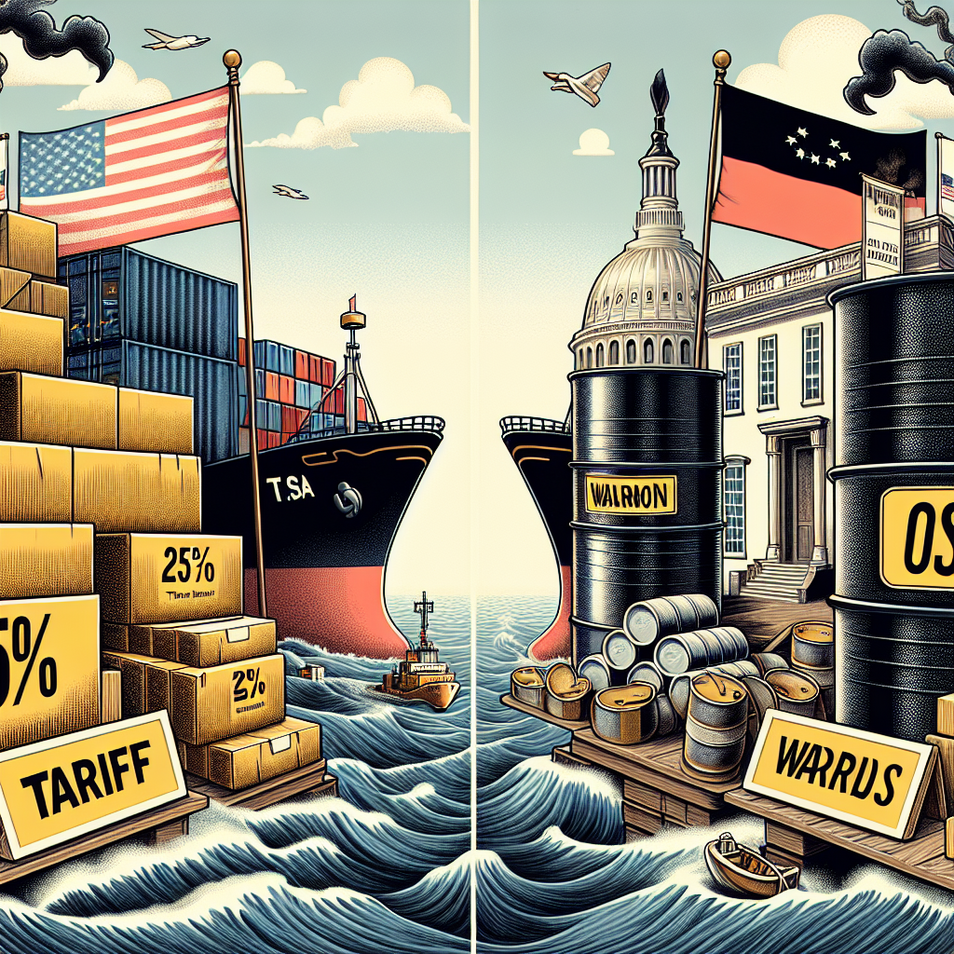
    In a move that’s sure to add strain to the already complex trade relationship between Washington and New Delhi, President Donald Trump announced a new 25% tariff targeting Indian goods. This latest escalation marks yet another turn in the ongoing trade tensions and comes seemingly out of the blue, as negotiations between the two nations were still reported to be underway just days earlier. The sudden tariff announcement sends a mixed signal about the future of U.S.-India economic cooperation.

    Adding further complications, Trump hinted at impending repercussions for India’s continued purchase of oil from Russia—a key piece of its energy strategy. While the president didn’t specify what those measures might look like, the warning underscores a growing U.S. impatience with allies maintaining economic ties with Moscow, especially amid heightened geopolitical tensions. This could place India in a delicate position as it balances strategic autonomy with international pressure.

    Indian officials responded cautiously, stating they are assessing the potential impacts of both the new tariffs and the oil-related implications. As one of the largest democracies and fastest-growing economies, India plays an essential role in the global trade matrix. These developments suggest there may be more recalibration needed in how Indian policymakers engage with the U.S., particularly in areas where national interests and foreign pressure collide.

    Observers believe that the timing of Trump’s announcements may also be linked to broader electoral and geopolitical calculations. With elections always on the horizon in U.S. politics, a tough stance on trade tends to rally certain voter blocs. On the flip side, unilateral pressure tactics risk alienating strategic partners like India, whose cooperation is vital in broader Indo-Pacific strategies meant to counterbalance China’s influence.

    The latest tariff move and veiled threats over Russian oil underscore an increasingly transactional U.S. foreign policy approach. While the final shape of penalties and negotiations remains unresolved, one thing is clear: the India-U.S. relationship is entering a more turbulent phase. Navigating this period carefully will be critical for both nations, as they attempt to strike a balance between principle and pragmatism in pursuit of mutual benefit.

  • Centene Faces Investor Scrutiny as Legal Investigation Gains Momentum

    Centene Faces Investor Scrutiny as Legal Investigation Gains Momentum

    Centene Corporation, a major player in the managed healthcare sector, is now under the microscope as investors react to a brewing legal storm. The prominent securities law firm Faruqi & Faruqi, LLP has begun investigating alleged misstatements or omissions made by Centene, prompting concern among shareholders. Citing potential violations of federal securities laws, the firm is urging those who experienced significant financial losses within a specific timeframe to explore their legal options.

    The period in question—December 12, 2024, to June 30, 2025—saw substantial volatility in Centene’s stock, which may have left some investors with sizable financial setbacks. Although the full nature of the claims has yet to be detailed publicly, Faruqi & Faruqi’s call to action implies serious questions about the company’s conduct, disclosures, or financial reporting. This legal interest could signal the start of an intense class action process, particularly as the September 8, 2025, deadline to file for lead plaintiff status approaches.

    James (Josh) Wilson, a partner at the law firm and a known advocate for investor rights, has taken the lead on the investigation and is encouraging affected shareholders to come forward. By reaching out to Wilson directly, investors can better understand whether they qualify to take part in the case and what potential recoveries might look like. The firm’s proactive public stance suggests strong investor interest and a growing list of participants seeking accountability from Centene’s leadership.

    This action comes at a pivotal time for the healthcare insurer, which has faced multiple challenges in adapting to shifting market dynamics and policy changes. Any substantiated claims of misrepresentation could have long-term implications—not only for Centene’s financial standing but also for its reputation with both investors and stakeholders in the healthcare system at large. The unfolding situation also reflects the broader financial community’s increasing demand for transparency and good governance.

    As the legal proceedings evolve, investors will be watching closely to see if Centene issues formal responses or updates regarding the situation. Whether this investigation unveils serious lapses or is resolved with minimal consequence, it’s a timely reminder of the critical need for corporate accountability in today’s economic landscape. For investors, staying informed and proactive in defense of their financial interests is more important than ever.

  • Silicon Motion Rides AI Wave as Q2 2025 Revenue Surges 19%

    Silicon Motion Rides AI Wave as Q2 2025 Revenue Surges 19%

    Silicon Motion Technology has posted a promising second quarter for 2025, driven largely by industry tailwinds and strong product momentum. Revenue reached $198.7 million, representing a 19% jump from the previous quarter, though still trailing 6% behind year-over-year figures. Despite the sales push, GAAP net income came in at $16.3 million, reflecting modest profitability challenges in the evolving semiconductor landscape.

    The company’s resurgence was fueled largely by robust demand for its SSD and flash memory controllers. Particularly notable was the dramatic rise in eMMC and UFS controller sales, which saw quarterly growth between 40% to 45%, thanks to surging smartphone shipments and increased market share. SSD controller sales modestly rose up to 5% compared to Q1, and while year-over-year comparisons remained under pressure, their strategic positioning in high-growth sectors offers future potential.

    President and CEO Wallace Kou highlighted the role of next-generation client SSD controllers in revitalizing growth, especially among edge AI PCs and hardware-centric AI server deployments. With the tech sector still flush with AI-driven investment, the company’s 6nm PCIe5 SSD controllers are carving a path within these expanding niches. Additionally, their diversified portfolio—spanning enterprise, automotive, and industrial applications—is reinforcing resilience against cyclical market fluctuations.

    Looking ahead, Silicon Motion remains optimistic, forecasting up to $228 million in revenue for Q3, which would push quarterly growth between 10% to 15%. Strategic bets on boot drive solutions for data processing units (DPUs), new memory controllers aligned with gaming consoles like the Nintendo Switch 2, and enterprise innovations like the MonTitan product line underline its strong trajectory. Their focus on shifting toward high-margin product lines is also expected to bolster earnings quality in upcoming quarters.

    As AI, mobile, and industrial tech demand continues to rise, Silicon Motion stands poised to benefit from its keen investments in advanced flash memory solutions. While supply chain complexities and pricing dynamics remain key external variables, the company is strategically positioned for long-term success. With deeper product penetration and enhanced market diversity, 2025 may be a pivotal year in Silicon Motion’s growth narrative.

  • Shifting Harvest: How Grain Bids Reflect a Changing Agricultural Landscape

    Shifting Harvest: How Grain Bids Reflect a Changing Agricultural Landscape

    The world of agriculture is steadily evolving, and perhaps nowhere is this more evident than in the realm of grain bidding. For farmers and grain buyers alike, daily grain bids serve as economic barometers, indicating market shifts, production expectations, and international trade flux. Recent fluctuations in these bids reflect not only seasonal changes but also the complex relationship between weather conditions, global demand, and domestic supply chains.

    This week, regional elevators have posted varying buy prices for key commodities such as corn, soybeans, and wheat. These shifts are not arbitrary but are closely tied to whispers of droughts in the Midwest, surging input costs, and delayed planting timelines that have raised concern among agricultural stakeholders. With commodity futures influencing these prices, the bidding situation gives us a real-time window into the pressure facing both producers and purchasers.

    Technology has played an increasingly significant role in how grain bids are processed and analyzed. From mobile apps to real-time online dashboards, both small and large-scale farmers now have tools at their fingertips that once were reserved for large agribusiness firms. These digital platforms not only ensure greater transparency but also enable quicker decision-making to maximize profits or minimize losses amid volatile markets.

    At the core of grain bidding is the age-old challenge of predictability in an unpredictable environment. Many farmers are choosing to forward-contract a portion of their harvests to secure baseline revenue while keeping the rest open to market highs. This strategy reflects a calculated blend of caution and ambition, where risk management is just as crucial as yield outcomes.

    Ultimately, grain bids are more than just numbers—they tell a story of regional resilience, shifting climates, and the drive of American agriculture to adapt. As we watch these prices rise and fall, it’s important to consider the broader forces at play. From the soil to the stock exchange, every shift in the grain market echoes a larger global narrative about food, economics, and sustainability.

  • Celestial Insights: How July 30’s Stars Are Guiding Your Inner Compass

    Celestial Insights: How July 30’s Stars Are Guiding Your Inner Compass

    As the final days of July drift past, the cosmic energy of the 30th encourages reflection, simplification, and grounding. It’s a potent day for tuning out the noise and tuning into what really matters. Whether you’re typically guided by the stars or not, today’s planetary movements have something to teach us all. It’s an ideal time to balance our emotional scales and repair the foundation we stand on, both literally and figuratively.

    For those under Aries, the call to simplify is louder than ever. Mental clutter and swirling thoughts may have distracted you lately, but clarity is within reach. Someone close to you—perhaps in a romantic or business partnership—may offer an unexpected perspective that helps you refocus your intentions. The stars suggest that now is the time to lean into support systems and rediscover what anchors you at home and in your heart.

    July 30 also offers potential for meaningful reconnection, especially within the home environment. Whether you’re nurturing familial bonds or simply reorganizing your space, the universe invites you to create harmony in your sanctuary. Trust that small gestures of care and presence will echo with powerful effects. The energies today reinforce the importance of comfort and tradition, something that should never be overlooked in an ever-changing world.

    Beyond personal connections, today may serve as a gentle prompt to let go of distractions and overcomplications. Are you saying ‘yes’ to more than you need? The planetary alignments encourage everyone, regardless of zodiac, to edit their internal and external lives with intention. Listen carefully to your intuition, as it could be the loudest voice of reason amid today’s mental fog.

    As the stars choreograph subtle shifts above us, we’re reminded that life doesn’t always need to be so complicated. There is beauty in slowing down, seeking simplicity, and reconnecting with what truly fulfills us. Whether it’s a meaningful conversation, a quiet moment at home, or the sudden relief of mental clarity, July 30 holds gifts for those willing to engage with intention and authenticity.

  • Breaking the Silence: Confronting Dysfunction in Executive Teams

    Breaking the Silence: Confronting Dysfunction in Executive Teams

    At the top of any organization, the executive team sets the tone for performance, collaboration, and strategy. Yet even the most experienced leaders aren’t immune to dysfunction. When communication falters and trust erodes, decision-making slows to a crawl and organizational silos start to build. It’s a slippery slope—and one that many CEOs underestimate until the damage is hard to reverse.

    One common crack in the leadership framework is what experts call ‘avoidant agreement.’ It happens when leadership team members nod along in meetings without fully buying in, then quietly act in opposition afterward. This passive resistance delays progress and breeds resentment. CEOs can counteract this by fostering an environment that encourages open disagreement without fear of reprisal—welcoming challenge as a sign of engagement, not defiance.

    Another problematic dynamic arises from a lack of role clarity. When executive responsibilities overlap or go undefined, confusion reigns, and finger-pointing often follows. Without a clear blueprint of who owns what, accountability vanishes. Successful leaders are those who routinely revisit their org chart, clarify decision rights, and ensure that everyone knows not just what needs to happen—but who is driving it forward.

    The third and perhaps most deadly dysfunction strikes when silos form. When functional heads prioritize departmental agendas over shared outcomes, collaboration breaks down. This isn’t just a workflow issue—it’s a cultural one. CEOs must champion cross-functional wins and build rituals, such as joint planning sessions or unified KPIs, that unify the team around common goals.

    In the end, tackling executive dysfunction requires courage and intentional design. Great leadership teams don’t become so by default—they’re built through honesty, mutual respect, and the willingness to evolve. For CEOs, the real power lies not just in setting the pace, but in sculpting the cohesion that makes the pace sustainable. Dysfunction is inevitable—but with vigilance, it doesn’t have to be permanent.

  • Duos Technologies Eyes New Growth with Public Stock Offering

    Duos Technologies Eyes New Growth with Public Stock Offering

    In a strategic move to propel its next phase of growth, Duos Technologies Group, Inc., a Florida-based tech firm recognized for its nimble Edge Data Center solutions, has announced plans to raise capital through a public stock offering. This new step underscores the company’s ambition to expand its suite of adaptive infrastructure technologies that address complex digital challenges in diverse environments.

    The announcement, made earlier this week, signals Duos Technologies’ intention to offer shares of common stock (or their equivalents) to the public underwritten by financial agents. While specific terms, such as the number of shares or pricing, remain undefined, the company emphasized the offering is dependent on market conditions, which adds an element of anticipation to the proceedings.

    For investors, this could represent a timely opportunity to align with a rising player in the Edge Data Center market — a niche poised for exponential growth as connectivity and data processing demand continues to soar across industries. The company’s focus on scalable, environment-agnostic solutions positions it as a forward-thinking contender in this competitive and rapidly evolving sector.

    What makes this news especially noteworthy is the timing. With businesses increasingly prioritizing reliable edge computing to support AI, IoT, and remote operations, Duos Technologies seems well-placed to leverage new funding to fuel product innovation, deepen R&D investments, or expand its market presence.

    While the success of the offering remains uncertain until details firm up, the announcement itself demonstrates Duos Technologies’ long-term confidence in its business model and market relevance. Whether you’re an investor looking for tech-driven opportunities or simply tracking disruptive technologies, this move is a key signal of the company’s ambitions and direction.